
Proper Introduction
To address Jobs shortages in the UK, many UK construction companies have expanded their recruitment efforts internationally. Skilled foreign workers are being considered for positions in areas such as carpentry, electrical installation, plumbing, bricklaying, welding, civil engineering, and project management. Where appropriate, some employers are willing to provide visa sponsorship for eligible candidates who meet the requirements under the UK’s immigration system.
Another benefit offered by some construction employers is accommodation support. While free accommodation is not guaranteed for every role, temporary housing, shared accommodation, relocation assistance, or accommodation allowances may be provided, particularly for workers assigned to major infrastructure or remote construction projects.
One phrase that often attracts attention is “$85,000 UK construction jobs.” It is important to understand that salaries in the United Kingdom are paid in British pounds (GBP), not US dollars (USD). However, experienced professionals such as project managers, civil engineers, construction managers, quantity surveyors, and specialist tradespeople may earn salaries that are approximately equivalent to USD $85,000 or more, depending on exchange rates, bonuses, overtime, and employer benefits.
This guide explains everything prospective international applicants need to know about securing construction jobs in the UK. It covers salary expectations, visa sponsorship, accommodation options, educational requirements, essential skills, certifications, application procedures, and practical tips for increasing the chances of being hired.
Overview of the UK Construction Industry
Importance of the Construction Sector
The construction industry is one of the largest contributors to the United Kingdom’s economy. Every year, billions of pounds are invested in residential housing, commercial developments, transportation infrastructure, healthcare facilities, schools, industrial plants, and renewable energy projects.
Construction activities support millions of jobs directly and indirectly. Architects, engineers, surveyors, electricians, plumbers, machine operators, bricklayers, carpenters, and general labourers all contribute to the successful completion of these projects.
Public investment in infrastructure has continued to support long-term employment within the industry. Housing shortages have encouraged new residential developments, while modernization of transportation systems has increased demand for skilled construction professionals.
Private-sector investment has also strengthened the industry. Commercial property developers, manufacturing companies, logistics businesses, and technology firms continue to commission new office buildings, warehouses, factories, and data centres throughout the UK.
As a result, construction remains one of the country’s most stable industries, offering attractive career opportunities for both experienced professionals and skilled tradespeople.
Why Construction Workers Are in High Demand
Several factors have contributed to the ongoing shortage of construction workers in the United Kingdom.
One significant reason is the aging workforce. Many experienced tradespeople are reaching retirement age, leaving gaps that cannot be filled quickly by newly trained workers.
Population growth has increased demand for new homes, schools, hospitals, and public infrastructure. Large housing developments have therefore been launched across multiple regions.
Government investment in transport projects, renewable energy facilities, flood defence systems, and public infrastructure has created additional employment opportunities.
Technological advancement has also increased demand for workers capable of operating modern construction equipment and using digital construction management systems.
Because domestic labour shortages continue to affect the industry, many employers have begun recruiting internationally through legal immigration pathways.
Major Construction Projects Creating Jobs
Numerous large-scale projects continue to create employment opportunities across the United Kingdom.
Residential housing developments remain one of the largest sources of construction employment. Thousands of new homes are being built each year to meet increasing demand.
Road improvement projects involve motorway expansions, bridge construction, and traffic management upgrades.
Railway modernization projects continue to generate demand for engineers, electricians, welders, and heavy equipment operators.
Renewable energy developments, including offshore wind farms, solar installations, and energy infrastructure projects, require skilled construction workers throughout the planning and construction phases.
Healthcare expansion has also contributed to construction employment as new hospitals, medical centres, and healthcare facilities are developed.
Educational infrastructure projects, including schools and university buildings, continue to create opportunities for skilled tradespeople and construction professionals.
Understanding Construction Jobs in the UK
What Construction Workers Do
Construction workers perform a wide variety of tasks depending on their area of specialization and the stage of a project.
Site preparation is usually completed before construction begins. Land may be cleared, excavated, and prepared for foundations.
Building materials are transported, assembled, and installed according to engineering drawings and project specifications.
Machinery such as excavators, cranes, bulldozers, and forklifts may be operated by trained personnel.
Health and safety procedures must be followed throughout every stage of construction. Protective equipment is required, and workers are expected to comply with strict workplace safety regulations.
Teamwork plays an essential role because construction projects involve collaboration among engineers, architects, supervisors, subcontractors, and skilled tradespeople.
Progress must be monitored carefully to ensure that projects remain on schedule and within budget.

Types of Construction Jobs Available
The UK construction industry offers opportunities for workers with different levels of education, experience, and technical expertise.
General Labourers assist with site preparation, material handling, cleaning, and basic construction tasks. Although these positions are considered entry-level, they often provide valuable experience for individuals entering the construction industry.
Bricklayers construct walls, foundations, chimneys, and other structures using bricks, blocks, and mortar. Precision and attention to detail are essential for producing durable and visually appealing structures.
Carpenters and Joiners install wooden structures such as doors, windows, roofing systems, staircases, flooring, and interior fittings. Their work is required in residential, commercial, and industrial projects.
Electricians install and maintain electrical wiring, lighting systems, circuit boards, and power distribution networks. Because electrical safety standards are strictly regulated, qualified electricians remain among the highest-paid construction professionals.
Plumbers install water supply systems, drainage networks, heating equipment, and sanitary fixtures. Skilled plumbers continue to be in strong demand due to housing development and infrastructure expansion.
Welders fabricate and assemble steel components used in bridges, industrial facilities, pipelines, ships, and commercial buildings. Specialized welding certifications often increase earning potential.
Steel Fixers reinforce concrete structures by installing steel bars and reinforcement materials before concrete is poured. Their work contributes to the strength and durability of buildings and infrastructure.
Scaffolders assemble temporary platforms that provide safe access for workers operating at height. Strict safety regulations govern this occupation.
Concrete Finishers prepare, pour, level, and finish concrete surfaces for roads, buildings, foundations, and industrial facilities.
Painters and Decorators apply protective coatings and decorative finishes to both interior and exterior surfaces. Their work contributes to the final appearance and durability of completed projects.
Roofers install and repair roofing systems using materials such as slate, tiles, asphalt, metal, and composite products.
Groundworkers prepare construction sites by excavating foundations, installing drainage systems, and laying underground utilities before structural work begins.
Heavy Equipment Operators control excavators, bulldozers, cranes, loaders, and other specialized machinery. Proper certification and experience are generally required for these roles.
Construction Supervisors coordinate daily site activities, monitor productivity, ensure compliance with safety regulations, and manage construction teams.
Quantity Surveyors estimate project costs, manage budgets, negotiate contracts, and monitor financial performance throughout construction projects.
Site Engineers supervise technical aspects of construction, interpret engineering drawings, conduct quality inspections, and coordinate with contractors and consultants.
Construction Project Managers oversee entire construction projects from planning through completion. Budgets, schedules, staffing, quality control, and client communication are managed under their supervision. Because of the high level of responsibility involved, project managers often receive salaries equivalent to or exceeding USD $85,000, depending on experience and employer.
Average Salary for Construction Jobs in the UK
Salary levels vary according to occupation, qualifications, location, employer, and years of experience.
Entry-level labourers generally earn between £26,000 and £35,000 annually. Overtime payments may significantly increase total annual earnings.
Qualified tradespeople such as electricians, plumbers, carpenters, and bricklayers frequently earn between £40,000 and £65,000 each year, particularly when overtime and specialist allowances are included.
Construction supervisors and site managers often receive salaries ranging from £50,000 to £75,000 annually.
Civil engineers, quantity surveyors, and project managers may earn £65,000 to £95,000 or more, especially when working for large infrastructure contractors or multinational engineering firms.
Performance bonuses, pension contributions, overtime payments, travel allowances, and accommodation assistance may further increase overall compensation packages.
In regions such as London and South East England, salaries are generally higher than the national average because living costs and project values tend to be greater.
Salary Comparison Table
| Construction Job | Average Annual Salary | Experience Required | Demand Level |
|---|---|---|---|
| General Labourer | £26,000–£35,000 | Entry Level | High |
| Bricklayer | £35,000–£55,000 | 2–5 Years | Very High |
| Carpenter | £35,000–£55,000 | 2–5 Years | Very High |
| Electrician | £40,000–£65,000 | 3–6 Years | Extremely High |
| Plumber | £38,000–£60,000 | 3–6 Years | High |
| Welder | £35,000–£55,000 | 2–5 Years | High |
| Heavy Equipment Operator | £35,000–£55,000 | 2–5 Years | High |
| Site Supervisor | £45,000–£70,000 | 5+ Years | High |
| Site Engineer | £50,000–£80,000 | 5+ Years | Very High |
| Construction Project Manager | £65,000–£95,000+ | 7+ Years | Very High |
Visa Sponsorship Opportunities for Foreign Construction Workers
The United Kingdom continues to recruit skilled construction professionals from overseas to address labour shortages across several occupations. However, it should be understood that visa sponsorship is not available for every construction job or employer. Sponsorship can only be provided by employers that are licensed by the UK government to hire foreign workers.
For eligible applicants, visa sponsorship offers a legal pathway to live and work in the UK while contributing to the country’s growing construction industry.
Skilled Worker Visa
The Skilled Worker visa remains the primary route through which qualified foreign construction workers can be employed in the United Kingdom. Before an application can be submitted, a valid job offer must be obtained from a UK employer that holds a sponsor licence.
Once employment has been secured, a Certificate of Sponsorship (CoS) is issued by the employer. This electronic document contains details of the job role, salary, and sponsoring organization, and it is required when applying for the visa.
Applicants must also satisfy the applicable eligibility requirements, including salary thresholds, English language proficiency where required, and other immigration conditions in force at the time of application.
Construction occupations that are in demand may offer better prospects for sponsorship, particularly where employers are experiencing persistent recruitment challenges.
Employer Sponsorship Requirements
Before sponsorship can be offered, several conditions are generally expected to be met.
Applicants are usually required to:
- Possess relevant construction skills or qualifications.
- Demonstrate previous work experience where applicable.
- Meet the employer’s job requirements.
- Provide a valid passport and supporting documents.
- Satisfy immigration and security requirements.
Employers are expected to verify qualifications, work history, and identity before sponsorship is confirmed.
Certificate of Sponsorship (CoS)
The Certificate of Sponsorship is issued electronically after a job offer has been accepted.
The certificate contains information including:
- Employer details
- Job title
- Salary offered
- Employment duration
- Sponsorship reference number
Without this document, a Skilled Worker visa application cannot normally proceed.
Construction Occupations Commonly Sponsored
Although labour market needs change over time, sponsorship opportunities are often found in occupations such as:
- Civil Engineers
- Structural Engineers
- Quantity Surveyors
- Site Managers
- Construction Project Managers
- Electricians
- Welders
- Plumbers
- Steel Fixers
- Heavy Equipment Operators
- Carpenters
- Bricklayers
Availability depends on employer demand and immigration rules at the time of application.
Accommodation Support for Foreign Workers
One of the major concerns for international workers relocating to the UK is housing. Fortunately, accommodation support is offered by some employers, although the type of assistance varies considerably.
It should be noted that free accommodation should not be expected as a standard employment benefit. Instead, employers may provide temporary or subsidized housing depending on the nature of the project and company policy.
Temporary Accommodation
Many employers provide temporary housing for newly arrived workers.
Accommodation may be arranged for the first few weeks while permanent housing is secured.
This arrangement helps new employees settle into their new environment without the immediate pressure of finding private accommodation.
Shared Accommodation
Shared housing is commonly provided on larger construction projects.
Employees may share accommodation with colleagues working on the same project.
Utilities, internet access, and transportation may sometimes be included as part of the housing arrangement.
Accommodation Allowance
Rather than providing housing directly, some employers offer an accommodation allowance.
This financial support assists workers in paying rent independently.
The amount varies according to employer policy, project location, and salary package.
Remote Project Accommodation
Construction projects located in remote regions often require employers to provide accommodation because nearby housing options may be limited.
Purpose-built worker accommodation camps may include:
- Furnished bedrooms
- Shared kitchens
- Laundry facilities
- Recreational areas
- Internet access
- Transportation to worksites
Educational Requirements
Educational expectations depend largely on the specific occupation.
General Labour Positions
General labour roles often require only a secondary school education or equivalent.
Although formal qualifications may not always be mandatory, previous construction experience is considered advantageous.
Skilled Trades
Trades such as plumbing, electrical installation, welding, carpentry, and bricklaying generally require vocational training or apprenticeship qualifications.
Trade certifications demonstrate practical competence and improve employability.
Professional Construction Roles
Professional positions including engineering, quantity surveying, and project management usually require university degrees in relevant disciplines.
Degrees commonly include:
- Civil Engineering
- Construction Management
- Structural Engineering
- Quantity Surveying
- Architecture
Professional registration may also be required for certain engineering positions.
Professional Certifications
Possessing recognized certifications can significantly improve employment prospects.
CSCS Card
The Construction Skills Certification Scheme (CSCS) card is widely recognized across UK construction sites.
Although not legally required for every role, many employers expect workers to hold an appropriate CSCS card before accessing construction sites.
CPCS Card
Heavy equipment operators are frequently expected to possess a CPCS (Construction Plant Competence Scheme) card.
This certification demonstrates competence in operating specialized construction machinery safely.
NVQ Qualifications
National Vocational Qualifications (NVQs) provide evidence of practical skills and occupational competence.
Higher-level NVQs may support career progression into supervisory or management positions.
SMSTS Certification
The Site Management Safety Training Scheme (SMSTS) qualification is commonly held by site managers and supervisors responsible for workplace safety.
SSSTS Certification
The Site Supervisor Safety Training Scheme (SSSTS) certification prepares supervisors to manage health and safety responsibilities effectively.
First Aid Certification
Many employers value workers who possess current first aid qualifications, particularly those working in supervisory positions.
Essential Skills Required
Construction professionals are expected to demonstrate both technical competence and interpersonal abilities.
Physical Fitness
Construction work often involves lifting materials, climbing scaffolding, operating equipment, and working outdoors.
Good physical condition contributes to workplace safety and productivity.
Communication Skills
Clear communication is essential for coordinating activities with supervisors, engineers, subcontractors, and fellow workers.
Instructions must be understood accurately to prevent costly mistakes and safety incidents.
Teamwork
Construction projects rely heavily on collaboration.
Tasks are completed efficiently when workers cooperate effectively across multiple disciplines.
Time Management
Project deadlines are closely monitored.
Workers who consistently complete assignments on schedule are highly valued by employers.
Technical Knowledge
Construction drawings, specifications, measurements, and safety procedures must be interpreted correctly.
Modern construction increasingly involves digital technologies, requiring workers to adapt to new systems.
Health and Safety Awareness
Strict safety regulations govern UK construction sites.
Personal protective equipment must be worn, hazards must be reported, and safe working practices must be followed at all times.
Work Experience Requirements
Experience expectations vary considerably.
Entry-Level Roles
General labourers may secure employment with limited experience if they demonstrate willingness to learn and maintain strong work ethics.
Skilled Trades
Tradespeople are generally expected to possess several years of relevant experience.
Previous work on commercial, industrial, or infrastructure projects strengthens an application.
Supervisory Positions
Leadership positions usually require substantial industry experience together with demonstrated management capability.
Project planning, budgeting, scheduling, and team leadership experience are highly regarded.
English Language Requirements
Effective communication contributes directly to workplace safety.
Workers must understand safety instructions, construction plans, and operational procedures.
Depending on the visa route and employer requirements, applicants may be asked to demonstrate English language proficiency through an approved test or by meeting other accepted criteria.
Strong English communication skills also improve career advancement opportunities after employment begins.
Documents Required During Application
Applicants are commonly asked to prepare the following documentation:
- Valid passport
- Professional CV prepared in UK format
- Educational certificates
- Vocational qualifications
- Trade licences or certifications
- Employment reference letters
- Passport-sized photographs
- Police clearance certificate (where required)
- Medical examination reports (if requested)
- Certificate of Sponsorship (after job offer)
- English language evidence (where applicable)
Preparing these documents before beginning the application process often helps reduce delays.
Best UK Cities for Construction Employment
Several cities consistently generate strong demand for construction professionals.
London
London remains the UK’s largest construction market.
Large commercial developments, transport infrastructure, luxury housing projects, hospitals, and office buildings create continuous employment opportunities.
Higher salaries are generally offered to compensate for the city’s higher living costs.
Birmingham
Major regeneration projects continue to support construction employment throughout Birmingham.
Residential developments and commercial investment have expanded significantly in recent years.
Manchester
Manchester has experienced rapid economic growth.
Office developments, apartment construction, transport projects, and digital infrastructure continue to generate employment opportunities.
Leeds
Commercial property development and housing expansion contribute to sustained demand for skilled tradespeople.
Glasgow
Infrastructure improvements, residential construction, and renewable energy projects support employment across Scotland’s largest city.
Bristol
Engineering, aerospace, and commercial construction continue to stimulate demand for construction professionals throughout Bristol.
Industries Recruiting Construction Professionals
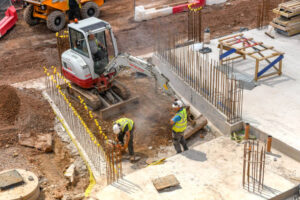
Construction workers are employed across numerous sectors, including:
- Residential housing
- Commercial office developments
- Civil engineering
- Highway construction
- Railway infrastructure
- Renewable energy
- Healthcare construction
- Educational facilities
- Industrial manufacturing plants
- Logistics and warehouse developments
Each sector offers different career opportunities depending on qualifications, experience, and technical specialization.